Apple Vision Pro 2: Is Spatial Computing Finally Ready?
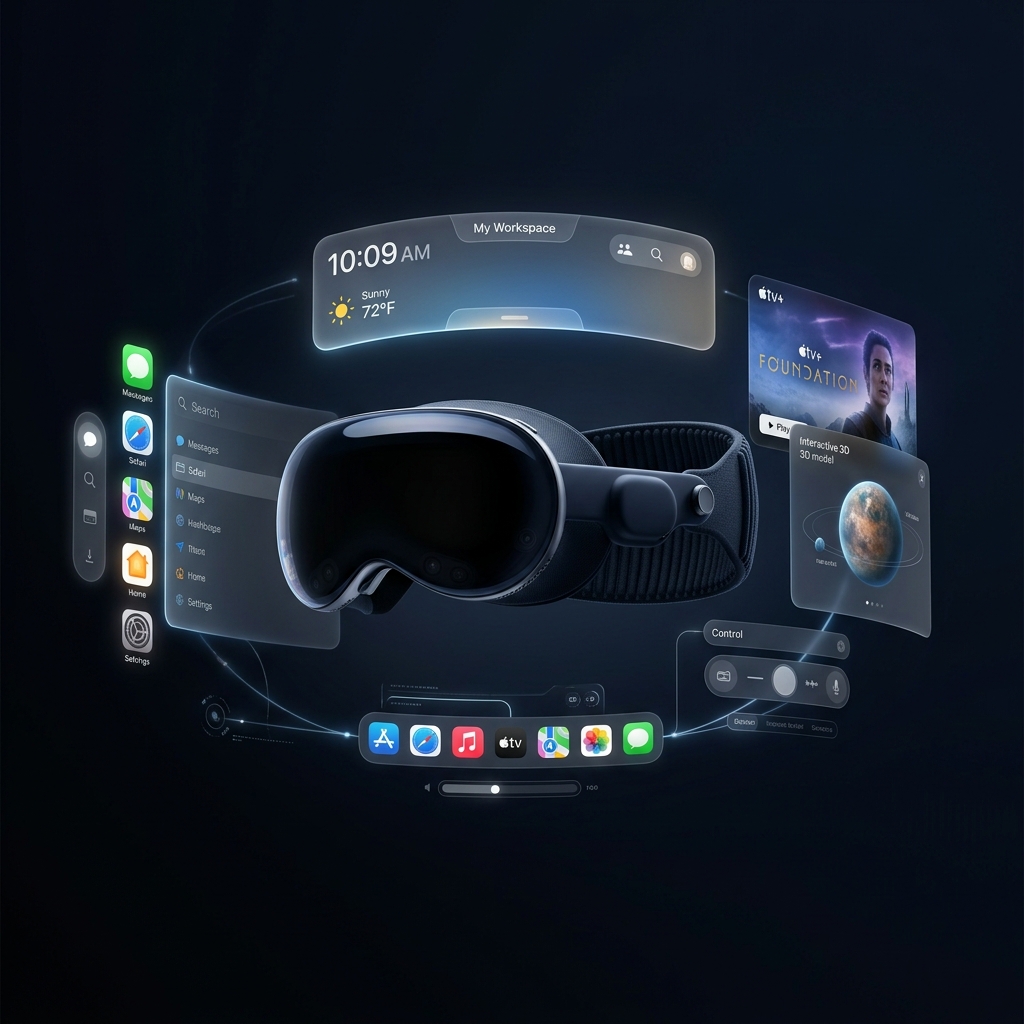
The Hardware Glow-Up
Apple Vision Pro 2 addresses almost every critique of the original. At 340 grams (down from 650g), it's genuinely wearable for extended sessions. The new M5 chip pushes 8K per eye, and the eye-tracking latency dropped to under 8ms — making foveated rendering indistinguishable from native resolution.
What's Actually New
Design
- 48% lighter than the original
- Fabric band replaces the rigid headband
- External battery is now integrated into the strap
- Prescription lenses snap-in magnetically
Display
- Dual 8K micro-OLED panels
- 4000 nits peak brightness
- 120Hz refresh rate (up from 90Hz)
- HDR10+ support
Interaction
- Full hand-tracking with individual finger pressure sensitivity
- Eye-tracking now works with glasses
- Voice commands in 12 languages
- New 'AirTap' gesture for quick selections
The Software Ecosystem
This is where it gets interesting. VisionOS 3 introduces:
- Spatial Xcode: Write and debug code in 3D space. Multiple monitors replaced by floating windows that persist in your physical space.
- Collaborative Spaces: Share your spatial environment with remote teammates. I tested this for pair programming and it's genuinely better than screen sharing.
- Universal Apps: iOS apps now run natively in spatial mode without developer intervention.
The Verdict
At $1,999, Vision Pro 2 finally enters 'expensive but justifiable' territory. For developers and creators, the spatial workspace alone saves the cost of a multi-monitor setup. For consumers? Wait for Vision Pro 3.
My Use Case
I've been using it as my primary development environment for the past two weeks. Three floating editor windows, a terminal below, and browser previews pinned to my left. It's not science fiction anymore — it's just Tuesday.
Interested in spatial development? I'm writing a guide on building for VisionOS 3.