Raspberry Pi 6: The Tiny Computer That Could
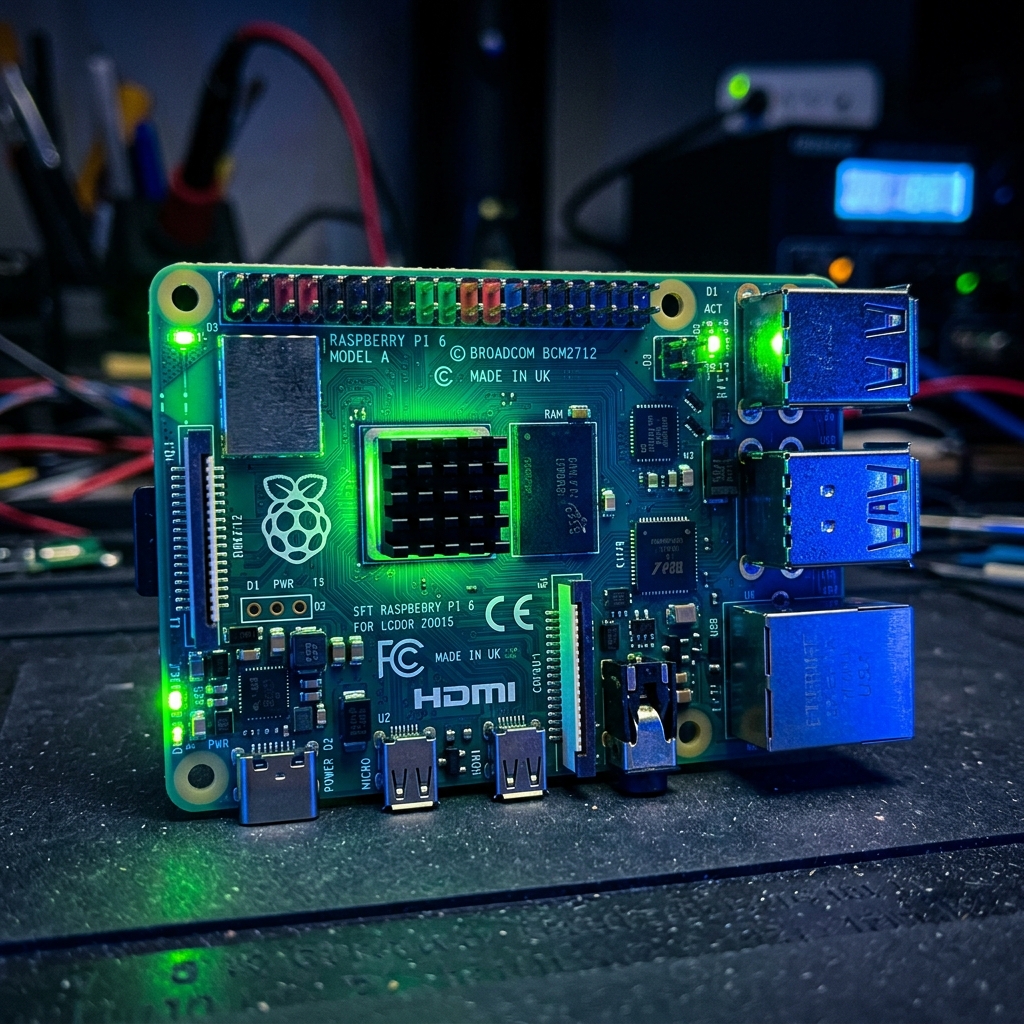
Not Your Grandfather's Pi
The Raspberry Pi Foundation just dropped the Pi 6, and it's a genuine paradigm shift. This isn't a slight bump over the Pi 5 — it's a rethink of what a $65 computer can do.
Specifications
- CPU: Broadcom BCM2713, Quad Cortex-A78 @ 2.8GHz
- GPU: VideoCore VII with Vulkan 1.3 support
- RAM: 8GB / 16GB LPDDR5
- Storage: M.2 2230 NVMe slot (PCIe 3.0 x2)
- AI: Integrated 4 TOPS NPU
- Connectivity: Wi-Fi 6E, Bluetooth 5.3, Gigabit Ethernet
- Display: Dual 4K60 via Micro-HDMI
- Power: USB-C PD (27W)
What I'm Running On It
1. Home Assistant Server
The Pi 6 handles my entire smart home — 42 devices, automations, and dashboards — without breaking a sweat. The 16GB RAM variant means I can run add-ons without the OOM killer visiting.
2. Local AI Inference
With the built-in NPU, I'm running Phi-4 Mini natively. It handles smart home voice commands with sub-200ms latency. No cloud, no subscription.
3. NAS Controller
Plugged into a USB 3.0 enclosure with 4x 4TB drives, it serves media to every device in my house. Plex transcoding at 1080p is smooth.
The Ecosystem Advantage
What makes the Pi special isn't just specs — it's the ecosystem. HATs, cases, tutorials, community support — no other SBC comes close. The Pi 6's backward compatibility with Pi 5 HATs means your existing accessories just work.
Who Should Buy It?
- Makers: This is the best maker board ever made. Period.
- Home Lab enthusiasts: A Pi 6 cluster is now genuinely viable for distributed computing.
- Students: $65 for a full Linux workstation with AI capabilities? That's transformative for education.
Bottom Line
At $65 for the 8GB variant, the Pi 6 delivers more compute-per-dollar than anything else on the market. I've ordered three more for my cluster.
Check my Studio page for the 3D-printed Pi 6 rack I designed.